
How to Turn Social Listening Insights into Traffic & Leads


Most companies use social listening for one thing: tracking mentions. Most SEO teams use keyword tools to find what people search for. Nobody connects the two — even though online conversations are often a preview of what people will search for next. In this article, I will explain the connection explicitly and show a workflow to act on it.
The signal hiding in plain sight
Social media conversations are a goldmine of information for any business — what people need, what they love, and what they complain about. More importantly, these conversations reveal the language people use before they turn to Google and type in a search query. Posts like "is there a reliable tool that does X" are pre-search behavior. Someone is about to go looking — they just haven't yet.
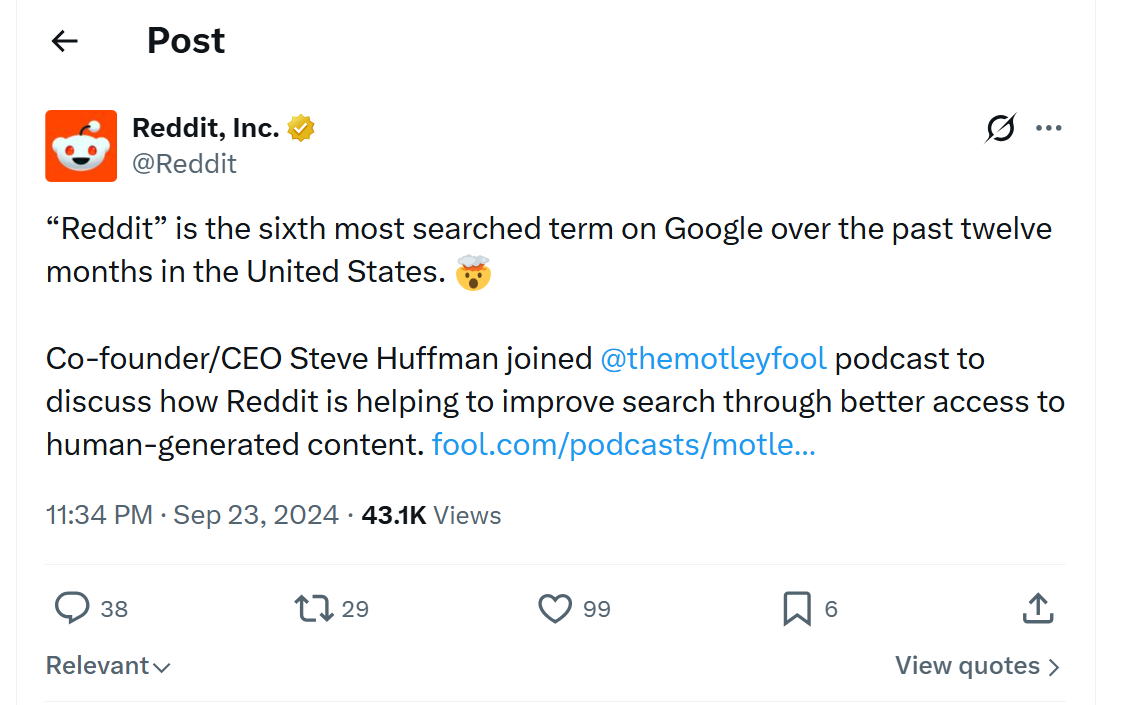
Here's a telling sign of how much this matters: people have been adding the word "reddit" to their Google searches for years now, specifically to bypass polished corporate content and find real human opinions. It became so widespread that Reddit's CEO noted it had become the sixth most Googled word in the United States.
Google eventually added a dedicated Forums tab to search results in response.
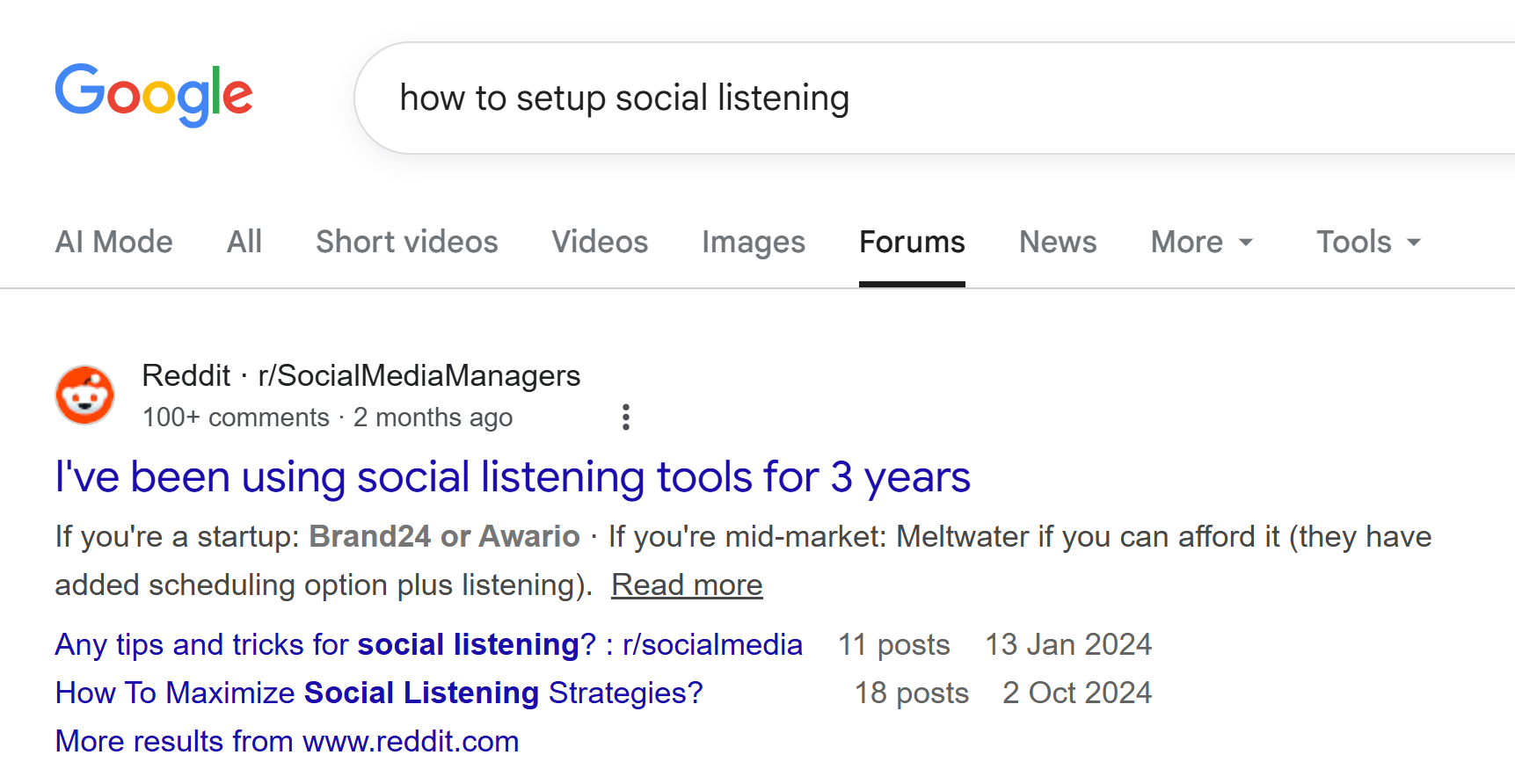
That's not a weird internet habit — it's millions of people signaling that they trust conversations over content.
The problem is that most companies never act on this. Social media alerts go to the communications department, get used for reputation management, and stop there. The SEO or content team might never even see that information.
There's a simple workflow to fix that gap. Here's how it works.
But first — why this matters more than ever
This used to be a nice-to-have. It's now something closer to urgent.
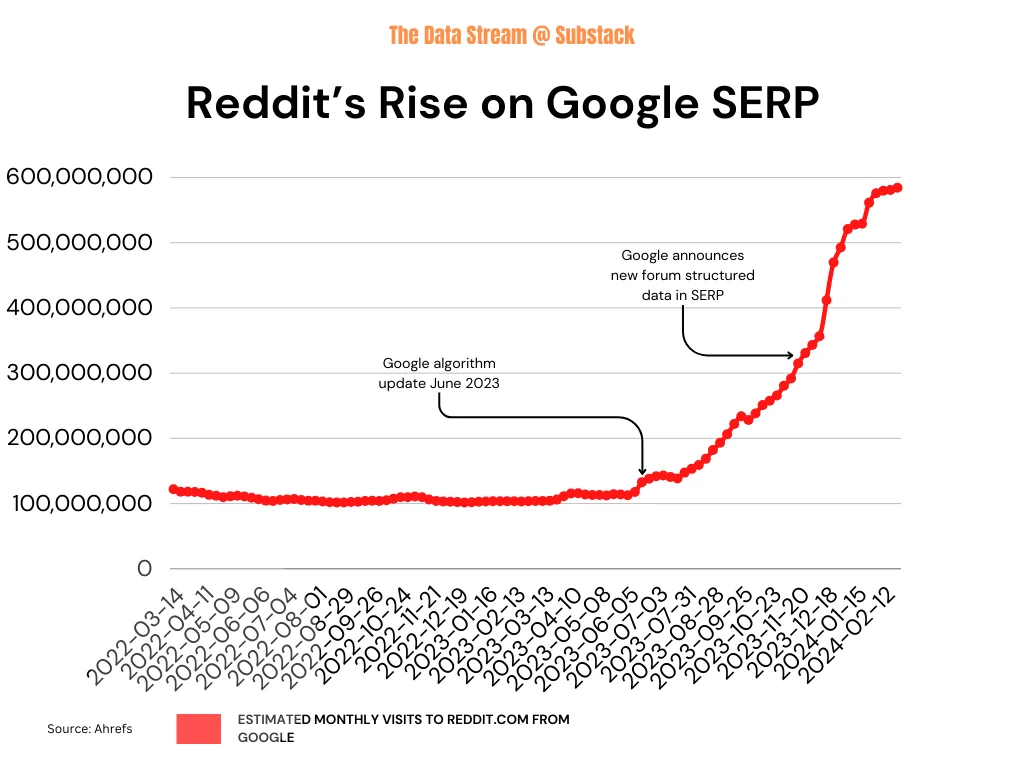
Reddit and forums are no longer a separate layer from search — they are search. Reddit now appears in 37% of Google SERPs and in 95% of product review queries.
Between August 2024 and June 2025, Reddit was the most cited domain in both Google AI Overviews and Perplexity, and the second most cited source in ChatGPT after Wikipedia. Reddit citations in Google's AI Overviews grew 450% between March and June 2025 alone.
This means that the conversations happening in forums right now are feeding directly into what AI systems tell the next person who searches for that topic. Monitoring those conversations isn't just a marketing exercise anymore — it's competitive intelligence.
Step 1. Set up social listening and monitoring
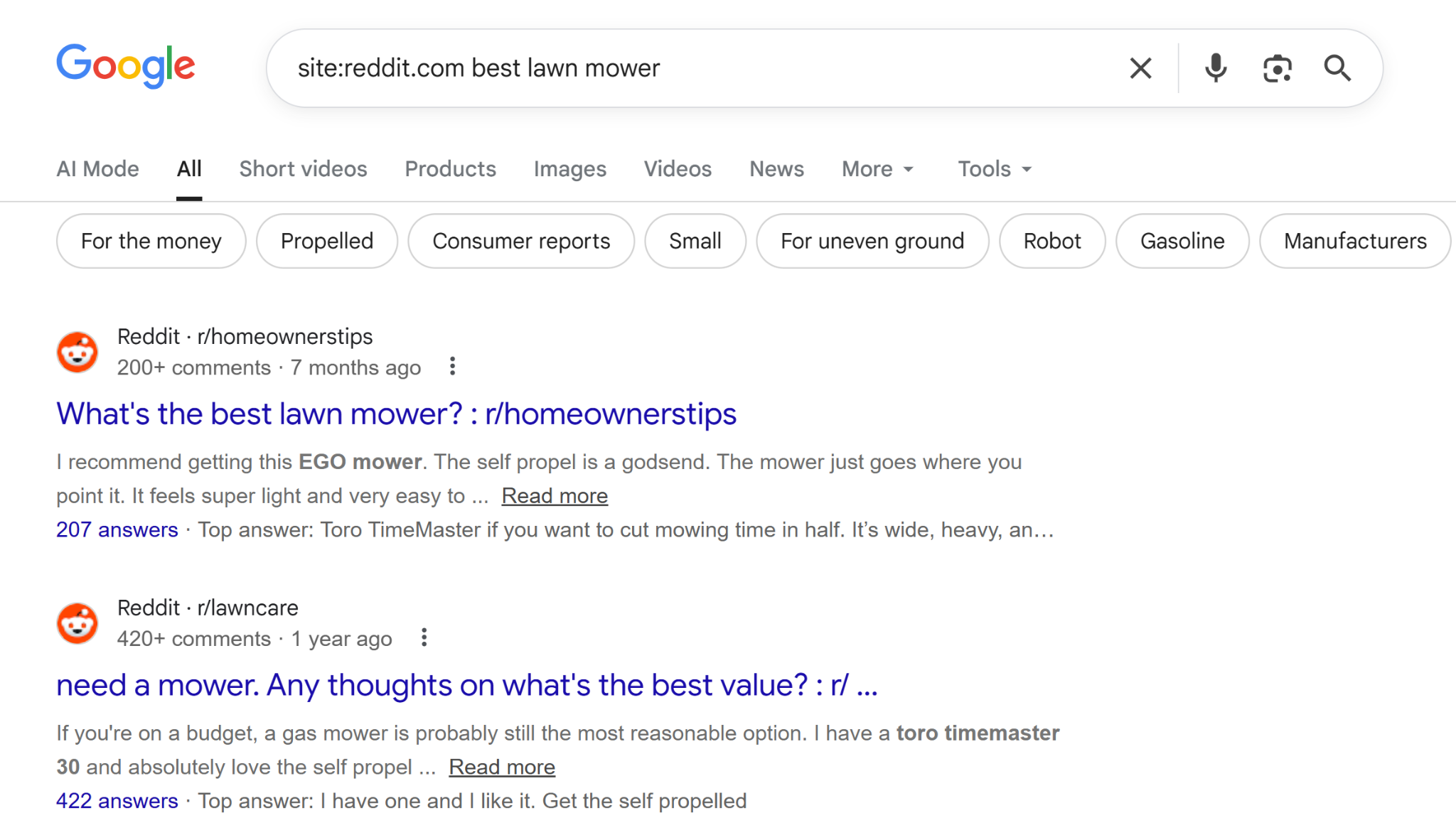
First, you need to find those meaningful conversations. The easiest free method as I mentioned earlier: go to Google and enter:
site:reddit.com [your main topic or keyword]
You'll instantly get dozens if not hundreds of discussions related to your keyword. If you're looking for conversations about a specific product or competitor, search for those too.
If you're using a social media monitoring tool like Awario, this data gets collected automatically in your dashboard. The real advantage there is that you can sort discussions by reach and quickly spot the hottest topics in your niche instead of manually sifting through search results.
Here’s how to get started with social listening in Awario:
- Sign up at awario.com and create a project. You'll see four ready-made presets — pick the one that fits your goal, or start with an empty project if you want full control.
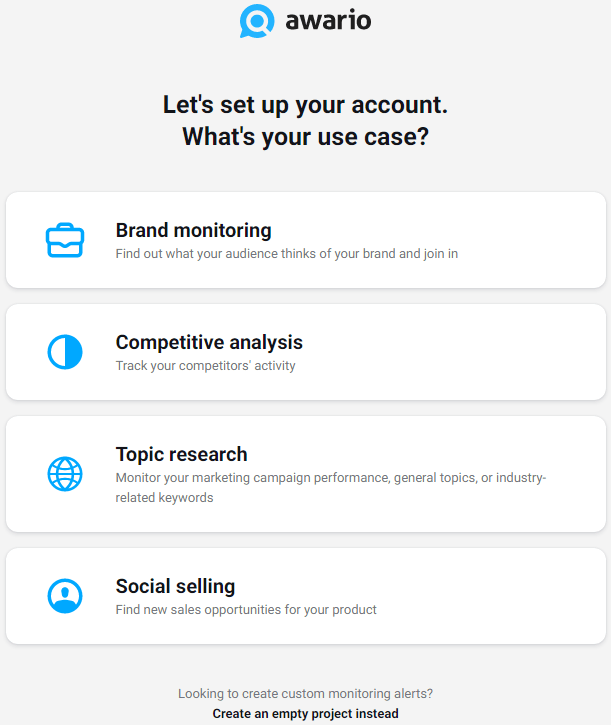
- Inside your project, click the + button in the sidebar to create a mention alert.
- Enter your keywords — these can be your brand name, competitor names, product category terms, or even specific phrases you want to track (e.g. "project management tool for remote teams").
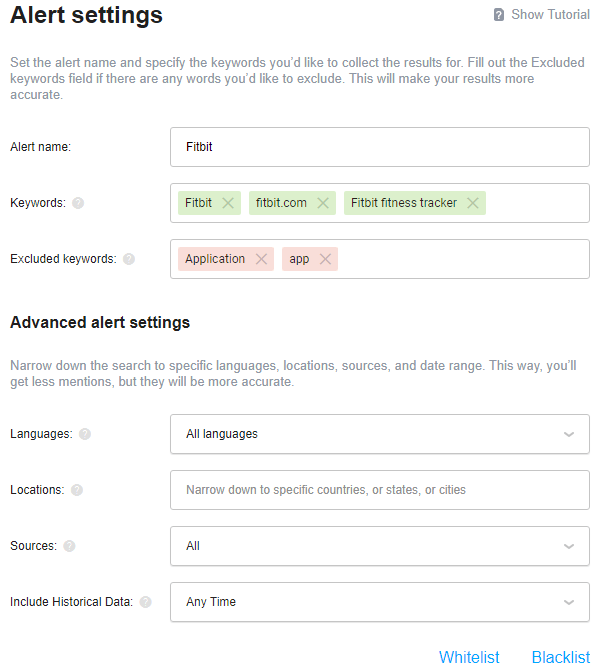
- Add excluded keywords to filter out noise. If you're tracking "notion alternative," you might exclude "food" or "cooking" to skip unrelated results.
- Set your sources — for this workflow, make sure Reddit and forums are included. You can also add Twitter/X, news, and blogs depending on your niche.
- Optionally set a language and location if your audience is regio
- Hit Start search. Awario will begin collecting mentions immediately, including historical data so you're not starting from zero
Once your dashboard populates, sort mentions by reach to see which conversations are getting the most traction — those are your best signals.
Tip
Participating in these conversations — not just monitoring them — also improves your chances of getting cited by ChatGPT or Gemini, since both pull from forum content to generate answers. One researcher tested this directly: he hired a company to post 100 Reddit comments promoting a SaaS product and measured the effect on AI Overview citations. They went up. The AI systems are reading these threads right now.
Step 2. Translate social language into keywords
Now you know what's triggering your audience — what they discuss, what they're missing, what they're frustrated about. You might have already joined a few Reddit or X threads to share your perspective. What's next?
Now comes the fun part. Take the recurring phrases, questions, and complaints you've collected and bring them into a keyword research tool. You're not copy-pasting Reddit sentences into Google — you're translating the intent behind them. "We switched from X because it kept breaking our imports" becomes "X alternative" or "X import issues." "Does anyone know a tool that does Y without a monthly contract" becomes "Y lifetime deal" or "Y one-time purchase."
One tool worth recommending here is RankDots — it doesn't just give you a list of thousands of phrases, it does the heavy lifting of analyzing search intent and clustering keywords into topics.
Instead of staring at a spreadsheet, you get a structured content map with a clear starting point.
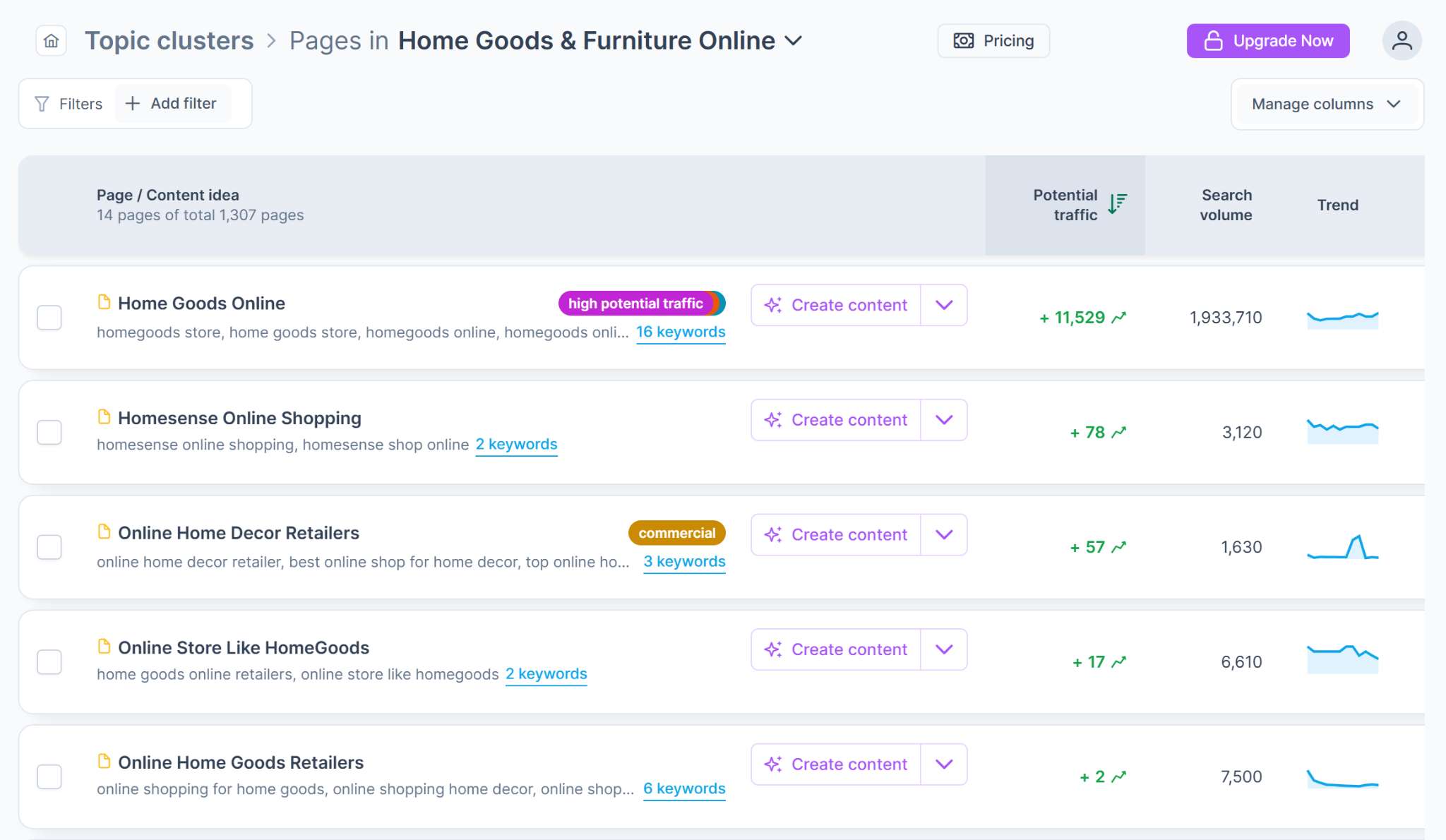
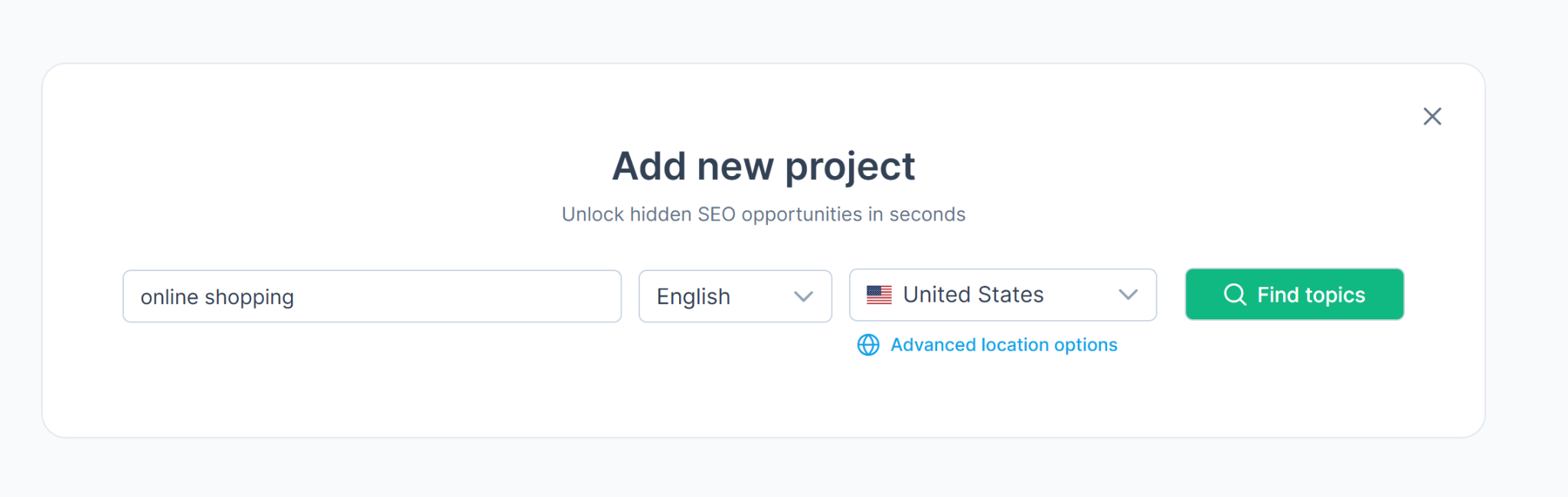
To get topic ideas, simply sign up for a RankDots account, click Add new project, enter your main keyword and hit Find topics:
When the tool collects the data (that might take a few minutes, as the tool checks the top-ranking search engine results), you’ll get a list of topic clusters - big topics that include fewer subtopics.
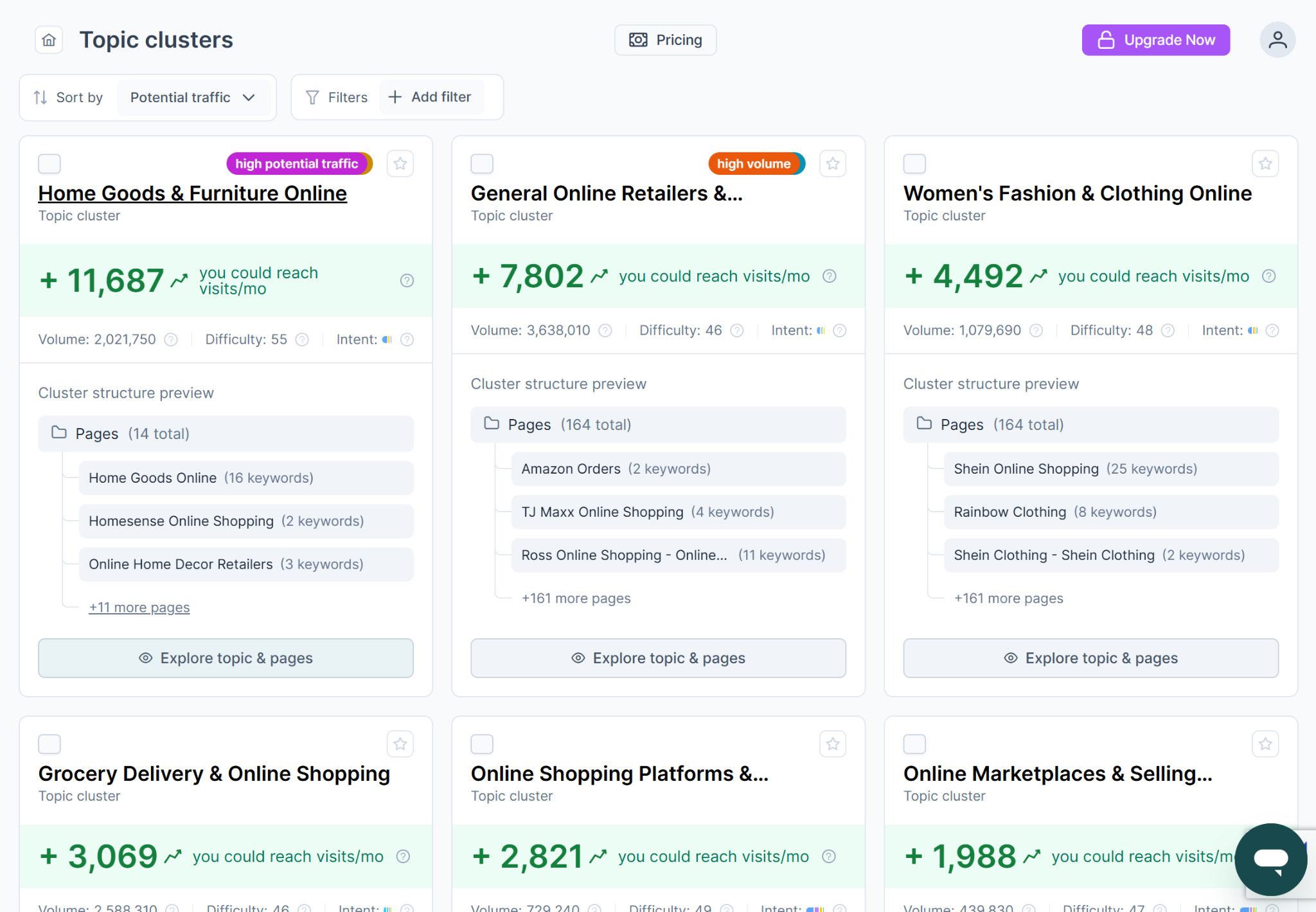
Now you can explore the topic ideas and yeven create content right inside the tool, specifying your content type, length, search intent, tone of voice, etc.
Here's a good example of how a social trend turns into search traffic.
When Notion exploded in popularity, dozens of competing tools suddenly faced the same Reddit conversation pattern repeating across subreddits: "I love Notion but it's too slow for large databases." That one complaint, appearing again and again in unconnected threads, wasn't one article idea — it was a whole content cluster waiting to be built. "Notion alternative for large teams," "Notion vs Coda for databases," "Notion performance issues" — an entire category of content born from a single forum frustration. The teams that spotted it early owned those rankings.
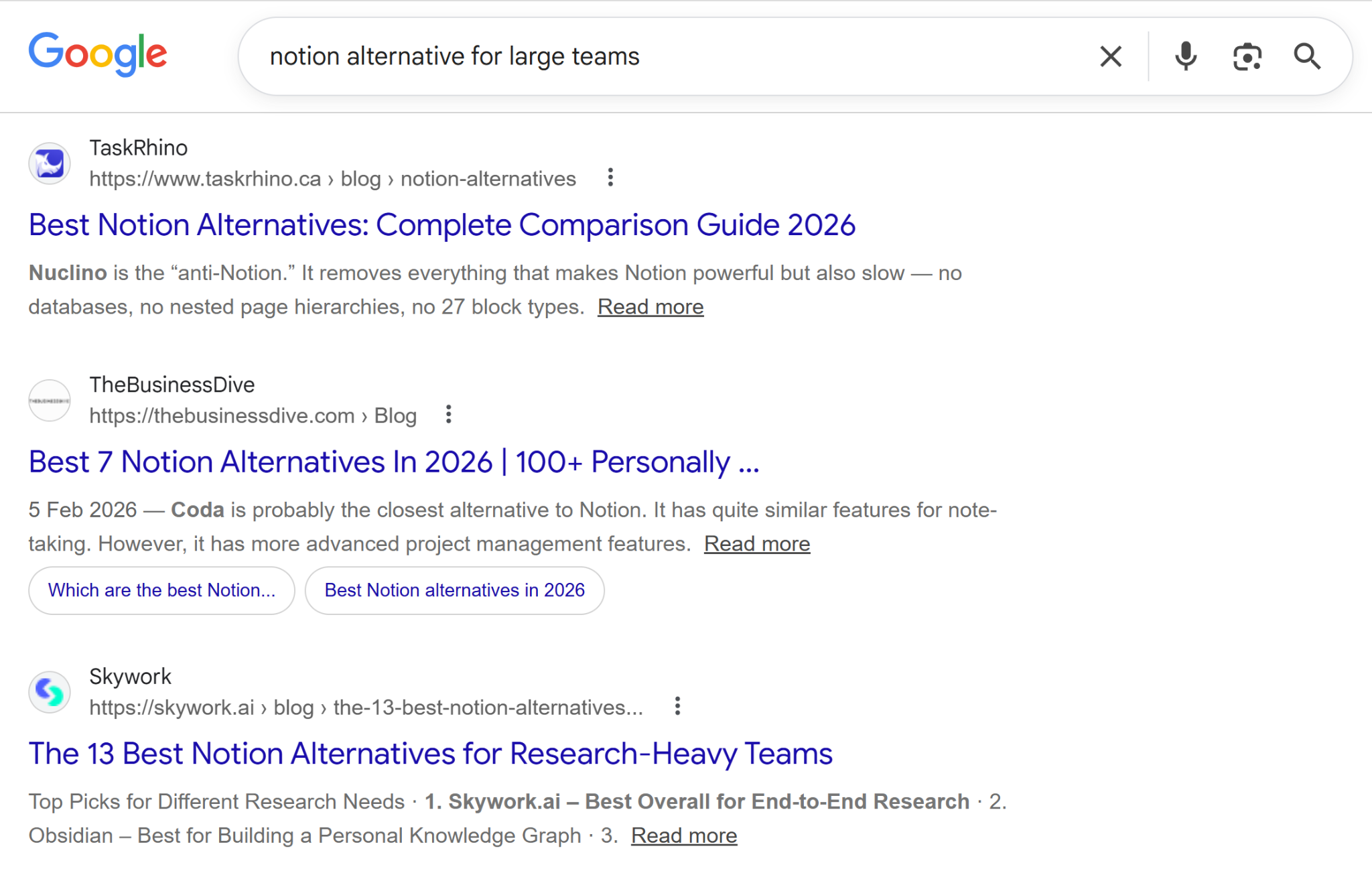
The ones doing traditional keyword research found it months later, after the competition had already moved in.
One thing to watch out for: social language and search language aren't the same thing. People on Reddit speak in frustrations, not queries. Your job is to find the keyword hiding inside the complaint.
Step 3. Build content that actually connects
When your content ideas come from real conversations, the language in your articles naturally mirrors what your audience already uses. Your headlines feel less like they came out of a content brief. Your examples are recognizable. Your subheadings answer the questions people actually have — not the ones you assumed they had.
The same principle can be applied beyond social listening: once you have reliable audience signals, search data, and performance metrics, they can become the foundation for a more systematic content strategy. A data-driven content approach helps bring those different inputs together, making it easier to identify relevant topics, validate content ideas, and prioritize what is worth creating based on evidence rather than assumptions.
The brands that get this right move fast. When the U.S. TikTok ban loomed and users started flooding to RedNote — a Chinese-language app — Duolingo's social team spotted the conversation immediately and posted a single line: "Oh so NOW you're learning Mandarin." It went viral instantly.
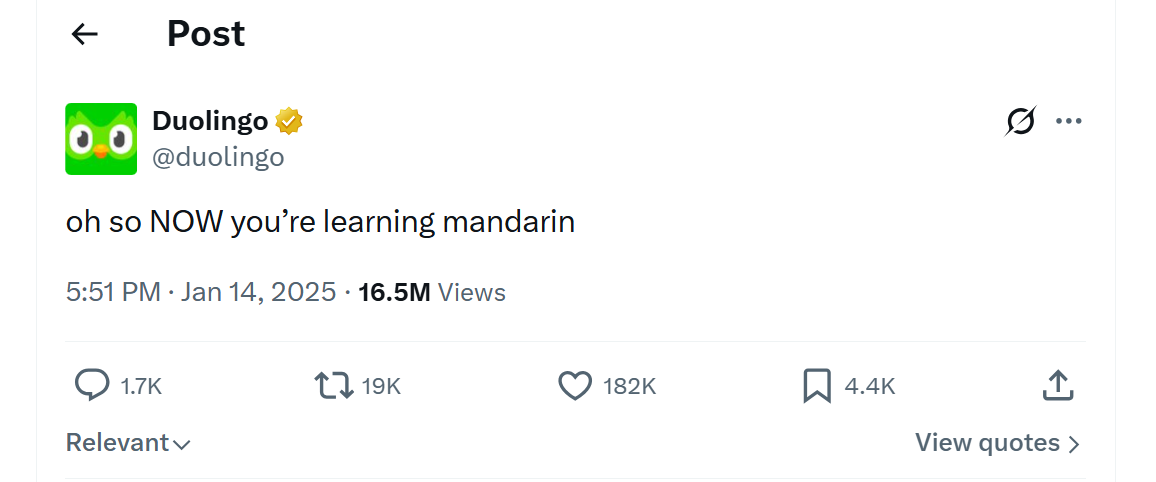
They weren't doing keyword research. They were listening, and they acted on what they heard within hours. That's the same muscle this workflow builds — just applied to content strategy instead of social posts.
That's not just good for engagement. It's what search engines are increasingly rewarding, for exactly the same reason Google started surfacing Reddit threads in the first place: authentic, experience-based content carries intent signals that polished corporate articles simply don't.
There's a conversion angle here too. The Sprout Social 2025 Index found that 81% of consumers make spontaneous purchases because of social media — and authenticity and relatability top the list of what they look for in brand content. Content that starts from real conversation clears that bar almost automatically.
Step 4. Close the loop — and keep it running
Most teams treat content strategy as a project.
Research → write → publish → move on.
This workflow is different because social conversations don't stop, which means your inputs don't either.
Go back to your listening dashboard every few weeks. Are new complaints surfacing around the same topics? Has the terminology shifted? Are competitors appearing in conversations where they didn't before? All of that is a signal for updating existing content, expanding a cluster, or spotting the next opportunity before it peaks in search.
Track your rankings on what you've built. When something starts to move, look at what's appearing in "People Also Ask" and in the comments when you share the piece. Feed those back into RankDots and see what new clusters emerge.
The teams that do this consistently end up with something most content strategies never achieve: they're always slightly ahead of the conversation, not catching up to it. Social listening gives you a window into what your audience is thinking before they search. That's a real edge — as long as you actually use it.